Put the Toys Away: Alex Brannon Confronts Lost Youth on Ashtray Full of Regrets

Updated: Aug 14
Content note: This review discusses depression, trauma, anhedonia, addiction, and suicidal ideation.
Lost youth rarely announces its departure.
There is no final bell. No official last call. No polite warning that this is the last night you will feel immortal.
One day, the room is full of friends, feedback, and possibility. The next, you are standing at the end of the road with an ashtray full of evidence that time passed anyway.
Punk rock ages you in a way that transcends the evidence compiled by the sands of time.
It does not measure age in birthdays, gray hairs, or the slow betrayal of your knees. Punk rock measures time in venues that close, bands that implode, friends who disappear, marriages that end, and the first moment a dream begins to look less like a destination and more like something you are expected to pack away before your shift starts.
Being a musician teaches you that the most heart-shattering, life-altering, soul-crushing breakups are not always between romantic partners.
Sometimes there is no custody agreement for the songs. No shared mortgage to untangle. No sympathy casserole appearing at your front door. There is only an empty rehearsal space, a group chat that slowly goes silent, and a future you had already started living inside your head.
Bands break up.
Friendships collapse.
Scenes change.
Houses stop being homes.
The people you thought would share the rest of your life with become people you used to know.
Sometimes the dream survives long after the people who built it together have stopped sharing it.
And sometimes, if life is feeling particularly fucking ambitious, several of those endings arrive at once.
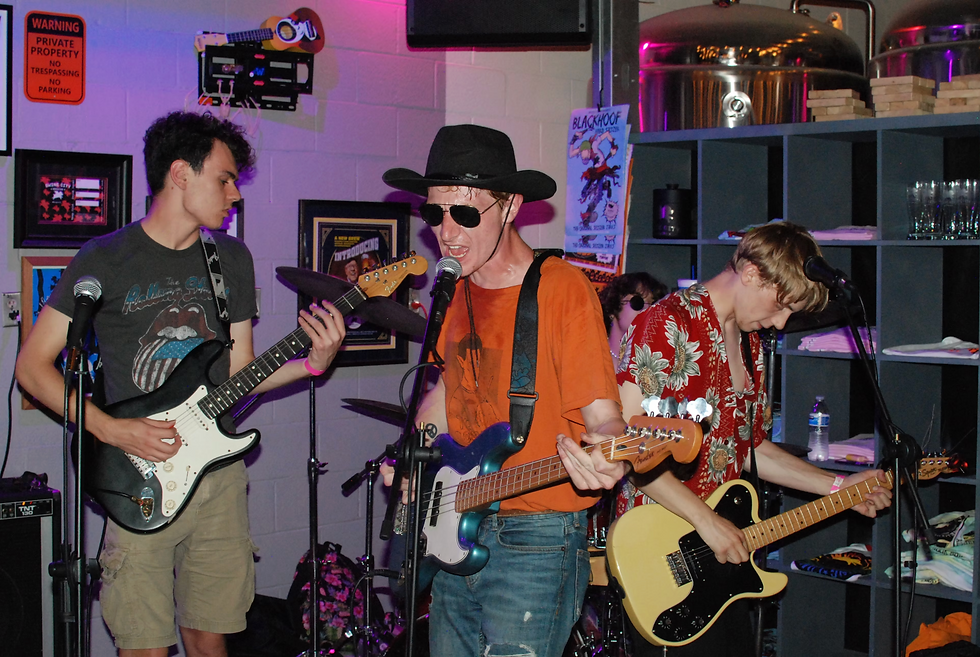
Four years ago, Bands in the Bus watched The Reedy Weeps close the indoor stage during the inaugural Hell Is Ohio festival. At the time, we wrote about a young band beginning its next chapter.
It felt like a beginning.
Not only for the band, but for every musician standing on that stage.
They sounded fearless.
Hungry.
Alive with possibility.
I watched Alex when he was a teenager playing in a band I thought, with the kind of ridiculous certainty only music writers and proud pseudo-family members possess, could be the next Nirvana.

That is the magic trick young talented bands perform on the people who love them.
They make the future feel inevitable.
Then life happens.
Now Alex Brannon is writing from the other side of that possibility.
And, inconveniently enough, so am I.
I am writing this while navigating the very sudden collapse of what I genuinely believed was my punk-rock fairy-tale marriage—a marriage I thought would last forever, because apparently even those of us who spend our lives documenting the beautiful wreckage of other people's relationships are still stupid enough to believe permanence might make an exception for us.
The home where I once watched young musicians become adults no longer exists in the way I thought it always would.
A chapter of my life that I considered intrinsically interwoven into every chapter that followed closed with such speed that I am still occasionally catching up to the fact that the story continued without it.
That makes Ashtray Full of Regrets an exceptionally dangerous record for me to review right now.
For the sake of honesty, I must disclose that I would be incapable of writing an objectively unbiased and impartial review of this work even under the best circumstances.
I have known Alex Brannon since he was a teenager.
I watched him grow up before my eyes—on stages, in venues, inside the home I shared with my ex-husband, and most recently from a few feet away on my front porch, where he showed up as part of a birthday present because apparently adulthood is discovering that the best gifts are sometimes people.
Alex is not simply an artist whose career I have covered.
I consider him family.
I consider his wife family.
I spoil their baby with the reckless enthusiasm of someone who has accepted that purchasing unnecessary things for a tiny human is one of life's remaining reliable sources of serotonin.
I have watched Alex become a husband and a father.
I have watched him fall in love.
I have watched him navigate things I would never reduce to content for a music review.
I have watched him survive situations that could have made him harder and somehow emerge softer.
So no, I cannot offer journalistic distance.
I cannot pretend I discovered this record in an inbox with no idea who made it.
I cannot separate the voice singing these songs from the teenager I watched become a man, or from the young father whose baby I will happily spoil, or from the quiet artist who has occupied enough rooms in my life that hearing him sing about putting away the past inevitably causes me to inventory some rooms of my own.
But I think I can offer something another reviewer cannot:
A pinhole lens of artistic transparency.
I watched Alex mature as he navigated unspeakable challenges, moments of triumph, irreversible setbacks, unprecedented detours, and perilous personal growth while pursuing opportunities that opened his heart to love, beauty, and wonder.
I watched adolescence accelerate around him.
I watched responsibilities arrive.
I watched dreams change shape.
I watched the life of a young musician collide with the much less romantic demands of becoming an adult man in a world where creativity most certainly begins to feel secondary to survival.
Alex didn't grow up to become the man I hoped he would become.
He became better.
The quiet, sensitive artist I knew as a teenager somehow managed to become a better person, husband, father, and musician than even I could have anticipated.
He did not lose his softness while learning how brutal the world can be.
He did not mistake cynicism for maturity.
He did not allow disappointment to make him cruel.
And Ashtray Full of Regrets sounds like the record you make when becoming that person costs considerably more than anyone warned you it would.
This five-song solo EP is a portrait of a young man rediscovering himself after an accelerated adolescence—a lifetime of hard-earned experiences somehow compiled into a few short years.
It is about lost youth, the impossibility of returning to it, and the unforgiving passage of time.
It is about the peculiar exhaustion of arriving in a future you never anticipated living long enough to see and discovering that adulthood looks absolutely nothing like the brochure.
It is about blue-collar fatigue.
Working-class woes.
Artistic burnout.
Marriage.
Fatherhood.
Regret.
Survival.
It is about what happens when the thing that once gave your life structure collapses and everyone around you seems to expect that you will simply build another one.
It is about growing into manhood when making art begins feeling like an indulgence compared to keeping the lights on.
It is about the fact that sometimes adulthood does not feel like becoming someone.
Sometimes it feels like slowly putting pieces of yourself into storage.
The arrangements reflect that emotional exposure.
There is nowhere for Alex to hide here.
No wall of distortion.
No roaring rhythm section to sweep the difficult words beneath the momentum.
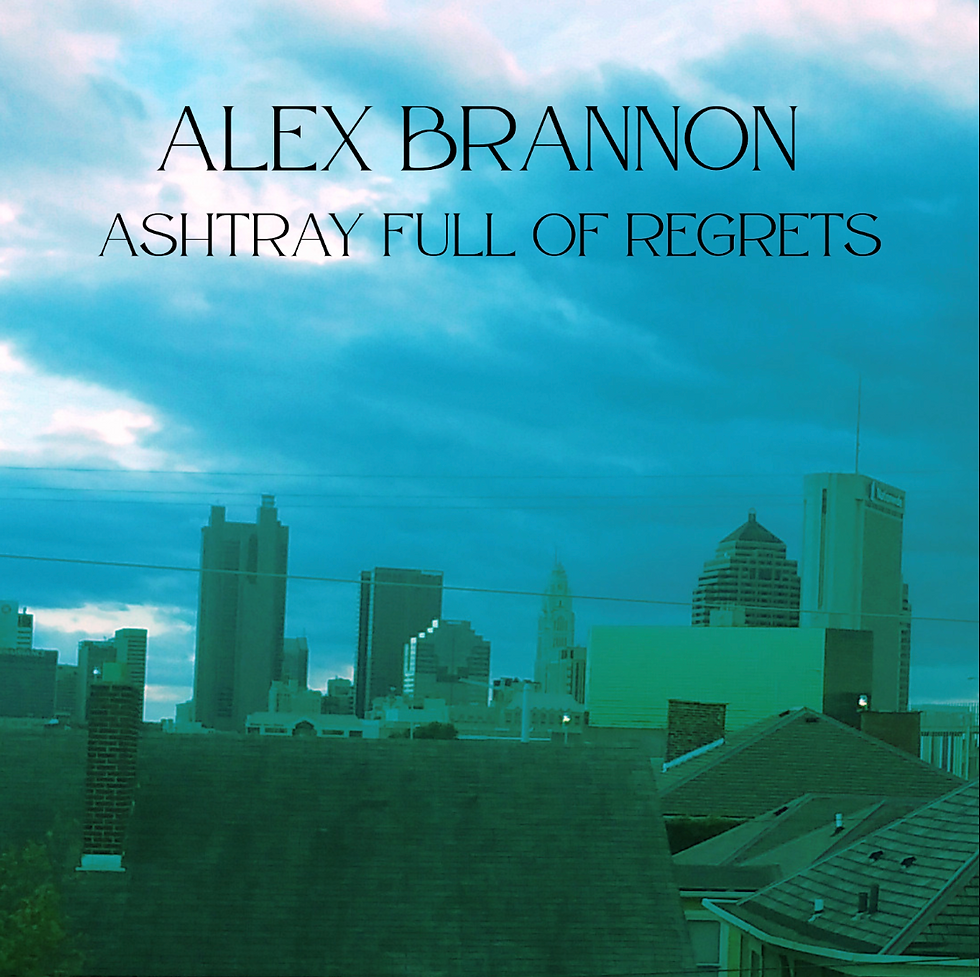
Primarily, there is Brannon's voice and guitar, with violin from Devan Brannon on the opening tracks and background vocals from Coyote Shivers on “Feel Something.” Alex also handled the mixing, mastering, and album artwork himself.
That DIY intimacy matters.
Every regret is left exposed.
Every loose stitch remains visible.
There is no band large enough to disappear into.
There is no sonic chaos to soften the confession.
There is only Alex, the guitar, and whatever remains after the fire.
And maybe that is why this record feels so painfully honest to me right now. Because Ashtray Full of Regrets is not really interested in asking whether we can get back what we lost. Alex seems to already know the answer.
We cannot.
The Reedy Weeps are not going to magically become the young band standing on that Hell Is Ohio stage again.
Alex cannot become the teenager I first watched perform.
I cannot walk back into the version of my marriage that existed before everything changed and simply decide to remain there.
You do not get to return to a chapter because you preferred the story before the page turned.
That is the bargain time makes with no one and collects from everyone.
What we can do is decide what to carry forward.
What to burn.
What to write down.
What to leave behind.
And what, reluctantly, we finally have to put away.
Toys — The First Thing We Lose
The first thing Brannon asks us to do is hold on.
The second is to accept that he may no longer be able to.
“Toys” opens with something resembling encouragement, but the optimism begins deteriorating almost immediately. The dream still exists. It has not died. Brannon simply cannot imagine reaching it anytime soon.
That distinction is devastating.
There is a particular kind of grief reserved for dreams that are still alive but no longer feel accessible. The dream is still around.
That should be comforting.
Instead, Brannon immediately complicates it by admitting that he is nowhere near reaching it.
There is an incredibly specific grief attached to dreams that have not technically died.
Dead dreams can be buried.
The ones that remain possible haunt you.
They sit somewhere just beyond your reach reminding you of who you thought you would become before rent, jobs, grief, parenthood, broken bands, failed relationships, survival, and the general administrative bullshit of being alive began demanding pieces of you.
Eventually Brannon arrives at the devastatingly simple image that anchors the song: call it a day and put the toys away.
There is something uniquely cruel about referring to art as toys.
Because isn't that what adulthood sometimes teaches creative people?
That the thing keeping you alive is frivolous:
That guitars are toys.
Shows are toys.
Songs are toys.
Dreams are toys.
And eventually responsible adults are supposed to put them away.
This record repeatedly wrestles with that particularly blue-collar version of artistic burnout: the moment creativity begins feeling secondary to survival.
There are bills.
There are people who depend on you.
There are shifts to work.
There are responsibilities that do not care whether inspiration showed up today.
“Toys” captures the moment when growing up begins to feel indistinguishable from giving up on the dreams you followed to get there.
And maybe this song hits me so hard because I am putting away toys of my own. There are pieces of the life I built with my former husband that I still do not know what to do with. Dreams that technically still exist but no longer belong to the two people who dreamed them together. Objects that have become emotional landmines. Memories whose meaning changed faster than I could process the loss.
There is enormous catharsis in hearing someone else admit that closing a chapter does not mean you wanted the book to end there. Putting the toys away should represent maturity. Growing up. Accepting responsibility. But here, it feels less like a natural transition and more like a forced evacuation from the self.
Brannon is not lovingly packing childhood into a box.
He is clearing the room after something burned.
Regret follows him until he can no longer get up. The objects that once represented imagination and possibility become reminders of disappointment, and eventually, he wants to throw them away and watch them disappear into ash.
That is where the EP’s title truly begins to take shape.
An ashtray is a container for what remains after the fire has already done its work. It collects the evidence. The residue. The pieces too small and damaged to become anything again.
“Toys” understands that regret has legs. It follows you from room to room. It chases you into adulthood. It sits beside the bed when depression makes standing feel impossible.
The most dangerous lie we tell ourselves about growing older is that outgrowing something is the same as healing from it.
Brannon knows better.
Sometimes we put the toys away because we have outgrown them. Sometimes we put them away because looking at them hurts too much.
***
End of the Road — Separation as Triage
“End of the Road” is perhaps the sharpest piece of writing on the EP.
The geography keeps changing, but Brannon never actually gets anywhere.
The world becomes progressively smaller until there is nowhere left to travel except inward.
In the beginning, Brannon imagines sewing a relationship’s loose stitches back together and somehow sharing forever with another person. Almost immediately, however, he reverses his position and insists that this person must leave him behind so he can find his own way home. That contradiction is not a flaw in the song.
It is the song. That contradiction is the emotional architecture and it is also painfully familiar.
Sometimes love and separation coexist.
Sometimes you can desperately want someone beside you while simultaneously understanding that you will never rediscover yourself as long as you continue defining “home” through another person.
And as someone currently discovering that the home I believed would contain the rest of my life was apparently only a chapter, that fucking lands.
There are endings you grieve because you wanted out.
There are endings you grieve because you would have stayed forever.
The second kind rearranges your internal geography.
Suddenly every road leads somewhere unfamiliar. In “End of the Road,” separation becomes a form of triage as even home becomes uncertain.
Brannon considers turning around. Hanging it up. Abandoning the search entirely. Brannon moves from the end of the road to the end of the street, then to the end of the line inside his own mind, where the demons have apparently been waiting all along. The further inward he travels, the fewer exits remain. The narrowing landscape matters because by the time the road transforms into the mind, the real destination becomes clear: there is no physical place capable of offering refuge from what lives inside him.
His demons were never waiting at the end of the road.
They were traveling with him. Eventually the song reaches “the end of the scene”—lovers, liars, thieves, memories, scraps of experience collected almost like souvenirs from a life Brannon is afraid he may one day misremember.
So he writes it down.
That might be my favorite idea on the entire record.
When everything else becomes unreliable, put it on paper.
Write down what happened.
Write down who you were.
Write down who you loved.
Write down what destroyed you.
Write down the things you survived badly.
Write it down because one day even your own memory may try to rewrite the story.
Art becomes evidence.
I was here.
This happened.
It mattered.
***
Feel Something — The Cruelty of Numbness
“Feel Something” is where Ashtray Full of Regrets stops merely describing pain and begins describing something I find infinitely more frightening.
Nothing.
Yesterday's pain remains wrapped around his brain, yet somehow the greater problem is numbness. Brannon pleads to feel something—anything powerful enough to drag him through the dirt and mud.
The song lives inside anhedonia—not ordinary sadness, but the hollowing-out that makes joy, pleasure, and even genuine interest feel unreachable. Sadness is still a sensation. Anhedonia is what happens when the emotional signal begins to disappear. It’s the persistant inability to derive pleasure from the things that once made you feel alive.
It is when your favorite song becomes noise.
When creating feels like labor.
When food is food.
Sex is sex.
Sleep is not rest.
A sunrise is simply proof that you must survive another day.
And when you reach that place, going somewhere far away begins sounding incredibly reasonable. It is not wanderlust. It is not adventure. It is the fantasy that geography might accomplish what healing has not.
Starting over can feel seductive after trauma, heartbreak, or unimaginable disappointment because starting over gives you tasks. Pack the boxes. Drive somewhere new. Learn unfamiliar streets. Find another room. Become a person no one there has met before.
Logistics are easier than feelings.
Movement is easier than waiting for your mind and body to decide that it is safe enough to experience joy again.
But “Toys” has already warned us that pain follows.
Changing the scenery does not dismantle the internal architecture. The puzzle pieces are already spread across the floor, and every piece is known. There is no hidden revelation left to discover that will enable everything to suddenly make sense. Brannon understands what happened and is acutely aware that understanding what hurt you does not necessarily make it hurt less or guarantee healing. Sometimes understanding only eliminates the mystery that once kept hope alive.
That is why the repeated demand to be left alone feels less like anger than exhaustion. Brannon is out of explanations. Out of emotional resources. Out of things to say that might change the ending.
The person he is addressing feels impossibly distant—almost protected from the betrayal of ordinary life. From Brannon’s perspective, its as though life itself has somehow spared them the humiliating experience of having reality lie directly to their face. They appear untouched by the disappointment that has rewritten his relationship with the world. The song captures what happens after the impact, when the initial pain has burned through every available emotion and left emptiness in its place. Brannon showcases that he understands something particularly ugly about trauma:
Eventually you stop asking to feel better. You just want proof you can still feel.
***
S.M.L. — The People Who Give Us Reasons to Stay
Then comes “S.M.L.” as it abandons nearly all decoration.
The request is immediate: save my life.
Do not ask for a second explanation. Do not demand a coherent account of every mistake that led here. Do not require the suffering person to prove that the suffering is real before offering help.
Just act.
After three tracks spent wandering through memory, regret, isolation, and emotional paralysis, Brannon finally does something enormously important.
He asks another person to come closer.
And tucked inside that plea is something even more important:
He says he will try. That matters.
For all the darkness surrounding Ashtray Full of Regrets, I do not hear this song as hopeless.
I hear it as the record's clearest acknowledgement that survival is relational. He is not handing another person complete responsibility for keeping him alive. He is acknowledging that survival sometimes requires participation from both sides. One person reaches out. Another reaches back. Neither can cross the full distance alone
Sometimes another person cannot fix the thing inside your head.
They cannot undo your trauma.
They cannot reverse your mistakes.
They cannot resurrect a dead dream or put a band back together or repair an entire life simply because they love you.
But sometimes seeing their face makes the pain go quiet for a minute.
Sometimes a minute matters.
There are themes throughout this EP of blue-collar exhaustion, working-class disappointment, artistic burnout, and the peculiar terror of reaching adulthood only to discover that creativity now has to compete with survival.
But “S.M.L.” remembers what why we choose to survive:
Love.
Family.
The people who make coming home mean something.
Knowing Alex as I do makes it nearly impossible for me not to hear this song through the life he has built with his wife and young son.
I have watched him fall in love.
I have watched him become a father.
I have watched the quiet teenager I once knew somehow magically transform into a remarkable young child with tiny hands reaching out for him.
That changes the stakes.
There is something profound about living in a future you never anticipated surviving long enough to see.
There is shame here, too.
Brannon knows where he has been. He is not proud of everything he has done to survive, but he also seems exhausted by the expectation that suffering must always be respectable before it deserves compassion.
And there is something equally profound about discovering that even in the grasp of anhedonia—when joy, ambition, and creative spark have been temporarily stolen by trauma, grief, anger, or exhaustion—there can still be reasons to continue.

Not grand reasons.
Human ones.
A face.
A hand.
A baby laughing.
Someone waiting for you to come home. For anyone who has ever loved someone through a dangerous night, that distinction is everything. Presence can become a bridge—not the entire road home, but enough structure to get someone across the worst moment.
After spending most of the EP trying to escape, Brannon finally asks another person to come closer.
And then the record arrives at the ledge.
***
The Ledge — The Influence Brannon Doesn't Bother Hiding
Good music makes us better music fans Alex Brannon is personally responsible for giving me a profound appreciation for The Replacements, a band that initially did absolutely nothing for me because, frankly, I was never their primary demographic.
And yet exposure through Alex changed how I heard them.
It made me understand the connective tissue between The Replacements, grunge, alternative rock, Midwestern punk, and generations of disaffected kids making brutally sincere music while pretending they did not care whether anybody listened.
I have often joked that Brannon sounds like some Gen Z Midwestern clone of Kurt Cobain.
The major difference is that Alex has absolutely no interest in pretending his influences do not exist.
His love for The Replacements has never been a secret.
With The Reedy Weeps, that influence was there, but it lived underneath louder textures and a broader band identity.
On Ashtray Full of Regrets, there is nowhere for it to hide.
And by the time Brannon arrives at his stripped-down cover of “The Ledge,” the influence has become so completely integrated into his own songwriting vocabulary that the song could almost pass as an Alex Brannon original to anyone unfamiliar with the source.

That is not because he imitates it.
It is because he understands it.
Placed immediately after “S.M.L.,” the cover becomes a devastating response to Brannon’s plea for rescue. Sometimes the request is heard. Sometimes people arrive. Sometimes love is real, enormous, and sincere.And sometimes it still cannot reach the ledge.
That is a brutal truth, but Brannon does not use it to diminish the importance of asking for help. Instead, it exposes the urgency of listening before a crisis becomes a spectacle—before someone must stand above a crowd to become visible to it.
By stripping the song down, Brannon removes whatever protective distance a louder full-band interpretation might have offered. There is no room to hide behind punk-rock nostalgia. The ordinary details become unbearable precisely because they remain ordinary.
“The Ledge” is about the horror of finally becoming impossible to ignore at exactly the moment recognition may no longer matter:
Everyone is looking.
Everyone cares.
Everyone wants to help.
And love still may not be able to reach far enough.
Placed after “S.M.L.,” that is devastating.
Brannon's stripped-down treatment preserves the desperate emptiness of the original but also captures something I have always found essential in his songwriting: self-accountability.
His narrator hurts.
They fucked up. They know they fucked up. They know other people have hurt them. They know sometimes there is no clean division between victim and perpetrator inside the wreckage of a relationship.
There is no saintly protagonist here.
Just a person standing in the consequences.
That, perhaps more than any chord progression or vocal resemblance, is where I hear The Replacements most strongly in Alex Brannon. Their influence can be heard throughout Brannon’s own writing—not merely in genre or chord progression, but in the way everyday objects carry enormous emotional weight:
Toys.
Paper.
A street.
An ashtray.
Loose stitches.
The fading light at the end of an ordinary day. The grand tragedy is always playing out in something painfully mundane.
***
What the Ashes Prove
Ashtray Full of Regrets does not offer a traditional recovery arc.
There is no sudden breakthrough. No triumphant final chorus assuring us that everything happened for a reason. Brannon does not confuse closure with healing or acceptance with happiness.
He documents the wreckage.
“TOYS” admits that the dream still exists but feels unreachable. “End of the Road” searches for home while insisting that the journey must ultimately be completed alone. “Feel Something” tries to escape the terrifying absence of emotion. “S.M.L.” finally asks another person to intervene. “The Ledge” confronts the possibility that love and attention may still arrive too late.
Yet the existence of this EP creates a contradiction that prevents it from becoming entirely nihilistic.
Brannon wrote these songs.
He performed them.
Recorded them.
Mixed them.
Mastered them.
Created the artwork.
Released them into the world.
The record about putting the toys away exists because Alex Brannon did not put away the one thing that allowed him to translate the regret.
Maybe that is the quiet hope buried beneath all this ash.
Although, I think calling it hope might still be too easy.
Maybe what Brannon finds is something less pristine and much more useful:
Beauty.
Beauty in the in-between.
Beauty in not knowing what comes next.
Beauty in surviving without pretending survival is glamorous.
Beauty in the people who sit beside you while you figure it out.
Beauty in writing something down before you forget.
Beauty in loving people even when you cannot save them.
Beauty in accepting that some chapters end without your permission.
Lost youth cannot be recovered, but it can be transformed.
Pain cannot always be repaired, but it can be witnessed.
The past cannot be returned to, but it can be written down before the mind forgets where it left the pieces.
I watched Alex when he was a teenager playing in a band I was convinced could be the next big thing.
Then, I watched that band disappear.
I watched the people involved continue growing anyway.
That matters.
Because the most heart-shattering breakups aren't always romantic ones.
Sometimes losing a band means losing a future, and sometimes, in my case, losing a marriage means losing an entire mythology you had constructed around your own life.
Sometimes adulthood is simply discovering how many versions of forever were actually temporary.
Ashtray Full of Regrets lives inside that discovery.
It is folk.
It is punk.
It is grunge.
It is blue-collar.
It somehow makes me feel young and hopeful and impossibly old and burnt out simultaneously.
It is the realization that adulthood is nothing like you imagined.
It is mundane, tedious, and exhausting.
It is getting up and going to work when your heart is broken.
Changing diapers.
Paying bills.
Answering texts.
Showing up for the people who still need you when some part of you would rather disappear.
Writing songs after creativity has started feeling like one more thing demanding something from you.
It is standing in a future you never anticipated living long enough to see and wondering what, exactly, you're supposed to do now that you got here.
And somewhere between the concrete pressure to provide and a world seemingly hellbent on crushing spirited creativity, there are cracks...and something survives inside them.
Maybe not optimism.
Maybe not healing.
Maybe not even hope.
But something.
That may be why this record found me at exactly the wrong—or perhaps exactly the right—moment.
Right now, I am learning alongside Alex that there are lives you believe will last forever that simply do not.
There are homes you leave.
There are bands that disappear.
There are people you lose.
There are dreams that remain alive long after you have lost the version of yourself who dreamed them.
There are versions of forever that reveal themselves to have always been temporary.
There are versions of yourself that become unrecognizable.
There are roads that simply end.
There are toys you eventually have to put away.
But Ashtray Full of Regrets exists because Alex Brannon did not put away the most important one.
He picked up the guitar.
He wrote it all on paper.
He left behind evidence.
In 2022, we watched Alex Brannon begin a new chapter with The Reedy Weeps.
In 2026, he is showing us what it costs to turn the page.
Not what it costs to forget the previous chapter.
Not what it costs to convince yourself that everything happened for some cosmic reason.
What it costs to turn the fucking page anyway.

Because sometimes moving forward is not a grand act of reinvention.
Sometimes it is simply refusing to let the ending be the last thing you create.
An ashtray is, after all, a container for what remains after something has burned.
Ash is evidence of destruction.
But ashes also prove there was a fire.
And maybe growing older in punk rock is learning that this is sometimes enough.
We were here.
We loved people.
We made something.
We believed in things that did not last.
We fucked things up.
We survived things badly.
We survived other things beautifully.
We watched forever become temporary and learned, however reluctantly, that temporary did not mean meaningless.
Time may be unforgiving.
But for five songs, Alex Brannon writes back.
And when the road ends, maybe finding our way home does not mean going backward.
Maybe home is whatever we manage to build from what remains.
Until next time, stay safe in the pit.
Listen and buy Ashtray Full of Regrets by Alex Brannon Here


Comments